




The 5 Systems Every Successful Football Academy Uses to Develop Elite Players
Most grassroots football academies struggle not because they lack talent or ambition, but because they lack structured systems that support consistent, long-term player development. Without clear frameworks guiding training, progression, and assessment, even the most passionate clubs can falter in truly nurturing elite players. Understanding and implementing the right football academy systems for player development is the difference between fragmented growth and holistic, sustainable success.
Why Systems Are Crucial in Football Academies
Systems create consistency. They ensure every player experiences structured sessions, clear expectations, and measurable progress that align with the club's goals. Without them, development becomes dependent on individual coaches or chance encounters rather than a unified plan.
In grassroots academies, where resources vary and staff experience may be uneven, solid systems help maintain quality across age groups and coaches. This supports elite player development in football academies by making sure that foundational skills and decision-making improve step-by-step in an organized way.

1. Football Academy Training Systems That Build Skills and Habits
Daily training routines based on repetition and progression form the backbone of any strong academy. This system focuses on skill development while embedding habits such as discipline, focus, and learning from mistakes.
Effective training systems balance technical drills, game-like scenarios, and individual feedback. This reinforces football coaching methodologies that prioritize a player's development curve over immediate results, ensuring every session adds meaningful value to their growth.
2. Player Development Frameworks for Measurable Progression
A clear, age-appropriate progression model is vital. It maps out expected competencies at each stage and helps coaches tailor sessions accordingly. These academy player progression models improve clarity for players, parents, and coaches alike.
Tracking tools and structured reports — now often supported by AI-enabled football assessment systems — provide objective data to guide decisions. This approach makes development transparent and encourages continuous improvement instead of guessing progress.
3. Organizational Systems That Support Academy Efficiency
Efficient scheduling, clear communication, and role clarity keep every stakeholder aligned. From coaches managing sessions and parents understanding commitments, to club directors overseeing academy operations, these systems maintain order and focus.
Strong organizational systems also ensure proper medical support, recovery protocols, and compliance with safeguarding policies. This protects young players’ welfare and underpins sustainable development.
Consistent systems, not shortcuts, build elite players over time in grassroots football.
4. Football Academy Systems for Player Development Feedback Loops
Regular, structured feedback creates a learning environment where players understand what to improve and how to do it. Coaches who implement consistent reflection sessions, individual reviews, and goal-setting foster deeper player engagement and responsibility.
Feedback intertwined with training tracking systems ensures that progress is not just observed, but acted upon in a timely manner — a key part of effective football academy training systems.
5. Structured Exposure and Match Learning Systems
Controlled match exposure and competition planning are often overlooked but critical. These systems provide players with varied competitive experiences that challenge them without overwhelming.
Well-planned matches and tournament participation help players apply training lessons practically, build mental resilience, and develop decision-making under pressure.
Practical implementation for grassroots clubs
Grassroots academies aiming to integrate these football academy systems for player development should start with clear priorities. Begin by establishing a simple training curriculum that progressively builds skills and habits. Introduce basic tracking methods—whether digital or manual—to monitor individual player growth.
Next, define roles and communication channels among coaches, parents, and technical staff to foster clarity and accountability. Incorporating regular feedback meetings, even briefly, can significantly impact player motivation and focus.
Taking cues from the best practices for football academies, including maintaining balanced match schedules and recovery protocols, ensures players are challenged appropriately without burnout.
For clubs looking to strengthen their internal structure further, exploring resources on football academy management and operations can offer systems and workflows specifically tailored for grassroots environments.
Common development mistakes
Ignoring systemization often leads to inconsistent coaching, unclear expectations, and missed development windows. Overemphasis on short-term results rather than skill mastery and decision-making growth can stall player potential.
Another common error is neglecting recovery and mental development. Without planned rest and psychological support, young players risk burnout, loss of motivation, or injury. This highlights why organizational systems that include welfare and recovery measures are essential.
Lastly, insufficient exposure to varied competitive environments restricts a player's ability to learn from real-game pressures. Balanced match systems are critical to prepare players for higher-level football.

Conclusion
Implementing football academy systems for player development is not a quick fix but a strategic commitment to consistent, quality progression. When academies embed clear training routines, structured progression models, effective organizational practices, actionable feedback loops, and sensible match exposure systems, they build a foundation where elite players can mature naturally over time. These systems align with real grassroots challenges — balancing development, welfare, and measurable growth. Commit to these five systems thoughtfully, and your academy creates not just players, but fundamentally stronger footballers prepared for every step of their journey.
What are the key systems needed in a football academy for player development?
Key systems include training routines, player progression frameworks, organizational management, feedback loops, and match exposure planning.
How can grassroots clubs implement effective training systems?
Start with simple, progressive training sessions focused on skill mastery, then add consistent tracking and feedback to guide player growth.
Why is player feedback important in football academy systems?
Feedback helps players understand their strengths and areas for improvement, fostering responsibility and continuous development.
What common mistakes should academies avoid in player development?
Avoid inconsistent coaching, focusing only on short-term results, neglecting recovery, and insufficient match exposure for players.

.jpg)
Related Articles
 Read More about Why Most Football Academies Lose Their Best Players (And How Smart Academies Keep Them)
Why Most Football Academies Lose Their Best Players (And How Smart Academies Keep Them)
 Read More about Common Mistakes Grassroots Football Clubs Make (And How to Fix Them)
Common Mistakes Grassroots Football Clubs Make (And How to Fix Them)
Latest Articles
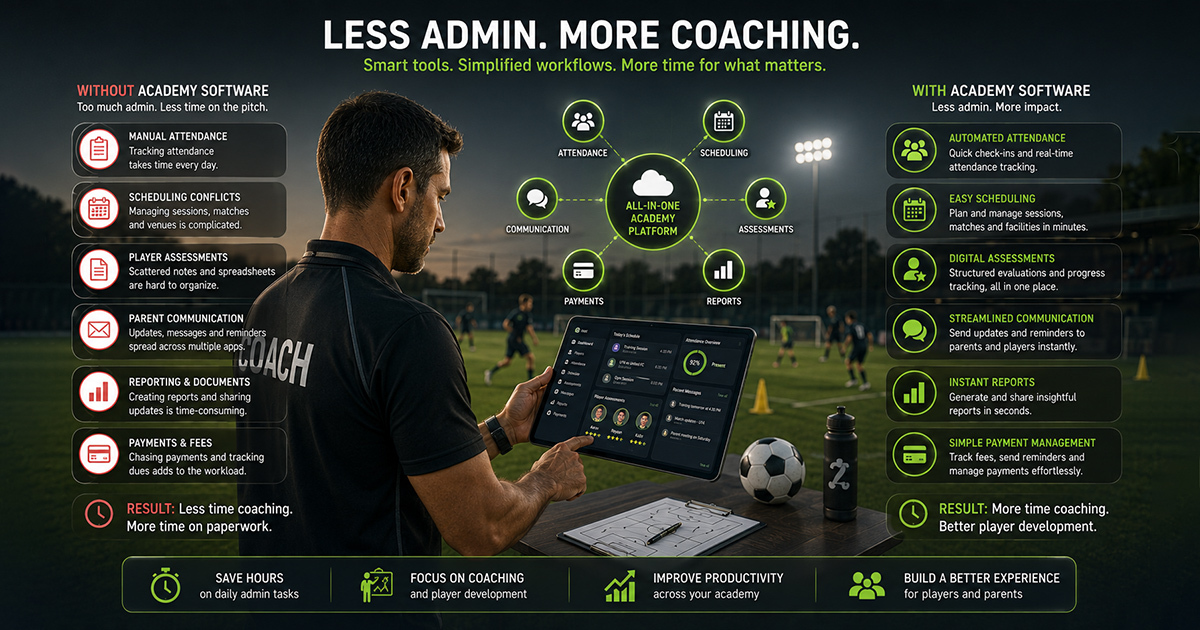 Read More about How Sports Academies Can Reduce Admin Work for Coaches
How Sports Academies Can Reduce Admin Work for Coaches
 Read More about How to Build Age-Wise Player Development Pathways in Football and Cricket
How to Build Age-Wise Player Development Pathways in Football and Cricket
 Read More about Tournament Management Software for Football and Cricket Organizers: A Practical Guide
Tournament Management Software for Football and Cricket Organizers: A Practical Guide
Ready to Bring Structure to Your Academy?
Let’s walk through your current setup and show you how 8lete can improve it.


